- Centos Ssh Setup
- Centos Generate New Ssh Keys Free
- Centos Generate New Ssh Keys For Windows
- Centos Generate New Ssh Keys 2017
- Centos Generate New Ssh Keys Key
With a secure shell (SSH) key pair, you can create virtual machines (VMs) in Azure that use SSH keys for authentication, eliminating the need for passwords to sign in. This article shows you how to quickly generate and use an SSH public-private key file pair for Linux VMs. You can complete these steps with the Azure Cloud Shell, a macOS or Linux host, the Windows Subsystem for Linux, and other tools that support OpenSSH.
- Apr 02, 2019 Home Linux Basics: How To Create and Install SSH Keys on the Shell. Users would be able to copy the public key into the authorizedkeys file of the new machine using the ssh-copy-id command. Given below is the prescribed format (strictly an example) for keying in the username and IP address, and must be replaced with actual system values.
- Dec 18, 2019 Creating SSH keys on CentOS # Before generating a new SSH key pair, it is a good idea to check for existing SSH keys on your CentOS client machine. To do so, run the following ls command that lists all public keys if there are any: ls -l /.ssh/id.pub.
- SSH, or secure shell, is an encrypted protocol used to administer and communicate with servers. When working with a CentOS server, chances are you will spend most of your time in a terminal session connected to your server through SSH. In this guide, we’ll focus on setting up SSH keys for a CentOS.
Note
Create a key pair for the new user account. Create a key pair, or use an existing one. Create a.ssh directory in the newuser home directory: $ mkdir.ssh. For Amazon Linux, Amazon Linux 2, RHEL, and CentOS: Use the usermod command to add the user to the wheel group. $ sudo usermod -aG wheel new. Jun 22, 2012 SSH keys provide a more secure way of logging into a virtual private server with SSH than using a password alone. With SSH keys, users can log into a server without a password. This tutorial explains how to generate, use, and upload an SSH Key Pair. Jan 28, 2016 Generating new ssh keys Post by taylorkh » Thu Jan 28, 2016 2:29 pm When I clone an OS image to a new, identical hardware PC I of course need to change the host name in a couple of places on the new machine. SSH allows the use of encryption keys to be used to allow logging into a system instead of having to remember a plain text password. This is great for use in scripts, and automated tasks, but can be a problem is anyone else ever gets the keys somehow. If the keys become compromised, you must generate new SSH keys.
VMs created using SSH keys are by default configured with passwords disabled, which greatly increases the difficulty of brute-force guessing attacks.
For more background and examples, see Detailed steps to create SSH key pairs.
For additional ways to generate and use SSH keys on a Windows computer, see How to use SSH keys with Windows on Azure.
Centos Ssh Setup
Supported SSH key formats
Azure currently supports SSH protocol 2 (SSH-2) RSA public-private key pairs with a minimum length of 2048 bits. Other key formats such as ED25519 and ECDSA are not supported.
Create an SSH key pair
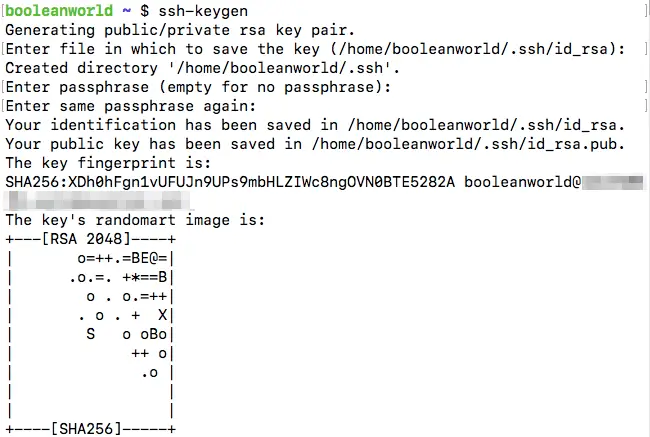
Use the ssh-keygen command to generate SSH public and private key files. By default, these files are created in the ~/.ssh directory. You can specify a different location, and an optional password (passphrase) to access the private key file. If an SSH key pair with the same name exists in the given location, those files are overwritten.
The following command creates an SSH key pair using RSA encryption and a bit length of 4096:
If you use the Azure CLI to create your VM with the az vm create command, you can optionally generate SSH public and private key files using the --generate-ssh-keys option. The key files are stored in the ~/.ssh directory unless specified otherwise with the --ssh-dest-key-path option. The --generate-ssh-keys option will not overwrite existing key files, instead returning an error. In the following command, replace VMname and RGname with your own values:
Centos Generate New Ssh Keys Free
Provide an SSH public key when deploying a VM
To create a Linux VM that uses SSH keys for authentication, specify your SSH public key when creating the VM using the Azure portal, Azure CLI, Azure Resource Manager templates, or other methods:
If you're not familiar with the format of an SSH public key, you can display your public key with the following cat command, replacing ~/.ssh/id_rsa.pub with the path and filename of your own public key file if needed:
A typical public key value looks like this example:
If you copy and paste the contents of the public key file to use in the Azure portal or a Resource Manager template, make sure you don't copy any trailing whitespace. To copy a public key in macOS, you can pipe the public key file to pbcopy. Similarly in Linux, you can pipe the public key file to programs such as xclip.
The public key that you place on your Linux VM in Azure is by default stored in ~/.ssh/id_rsa.pub, unless you specified a different location when you created the key pair. To use the Azure CLI 2.0 to create your VM with an existing public key, specify the value and optionally the location of this public key using the az vm create command with the --ssh-key-values option. In the following command, replace VMname, RGname, and keyFile with your own values:
If you want to use multiple SSH keys with your VM, you can enter them in a space-separated list, like this --ssh-key-values sshkey-desktop.pub sshkey-laptop.pub.
SSH into your VM
With the public key deployed on your Azure VM, and the private key on your local system, SSH into your VM using the IP address or DNS name of your VM. In the following command, replace azureuser and myvm.westus.cloudapp.azure.com with the administrator user name and the fully qualified domain name (or IP address):
If you specified a passphrase when you created your key pair, enter that passphrase when prompted during the login process. The VM is added to your ~/.ssh/known_hosts file, and you won't be asked to connect again until either the public key on your Azure VM changes or the server name is removed from ~/.ssh/known_hosts.
Mysql on duplicate key update changes auto generated id. If the VM is using the just-in-time access policy, you need to request access before you can connect to the VM. For more information about the just-in-time policy, see Manage virtual machine access using the just in time policy.
Next steps
For more information on working with SSH key pairs, see Detailed steps to create and manage SSH key pairs.
If you have difficulties with SSH connections to Azure VMs, see Troubleshoot SSH connections to an Azure Linux VM.
[donotprint][/donotprint]To regenerate keys you need to delete old files and reconfigure openssh-server. It is also safe to run following commands
Centos Generate New Ssh Keys For Windows
over remote ssh based session. Your existing session shouldn’t be interrupted.
Centos Generate New Ssh Keys 2017
Why regenerate new ssh server keys?
Most Linux and Unix distribution create ssh keys for you during the installation of the OpenSSH server package. But it may be useful to be able re-generate new server keys from time to time. For example, when you duplicate VM (KVM or container) which contains an installed ssh package and you need to use different keys from cloned KVM VM guest/machine.
Steps to regenerate OpenSSH host keys on Linux
Let us see all steps
Step 1 – Delete old ssh host keys
Login as the root and type the following command to delete files on your SSHD server:# /bin/rm -v /etc/ssh/ssh_host_*
Sample outputs:
Step 2 – Debian or Ubuntu Linux Regenerate OpenSSH Host Keys
Now create a new set of keys on your SSHD server, enter:# dpkg-reconfigure openssh-server
Sample output:
Centos Generate New Ssh Keys Key
You just regenerated new ssh server keys. You need to restart ssh server:$ sudo systemctl restart ssh
OR$ /etc/init.d/ssh restart
Step 3 – Update all ssh client(s) known_hosts files
Finally, you need to update ~/.ssh/known_hosts files on client computers, otherwise everyone will see an error message that read as follows:
Either remove host fingerprint or update the file using vi text editor (command must be typed on client machine):$ ssh-keygen -R remote-server-name-here
Now login using the ssh command:$ ssh vivek@server1.cyberciti.biz
Conclusion
Openssl generate private key from existing certificate. You just regenerated OpenSSH Host Keys on a Debian or Ubuntu Linux using the dpkg-reconfigure command. For more info see the man page or this wiki page here:$ man dpkg-reconfigure
$ man sshd
ADVERTISEMENTS